The mechanics of this practice are simple, and fun.
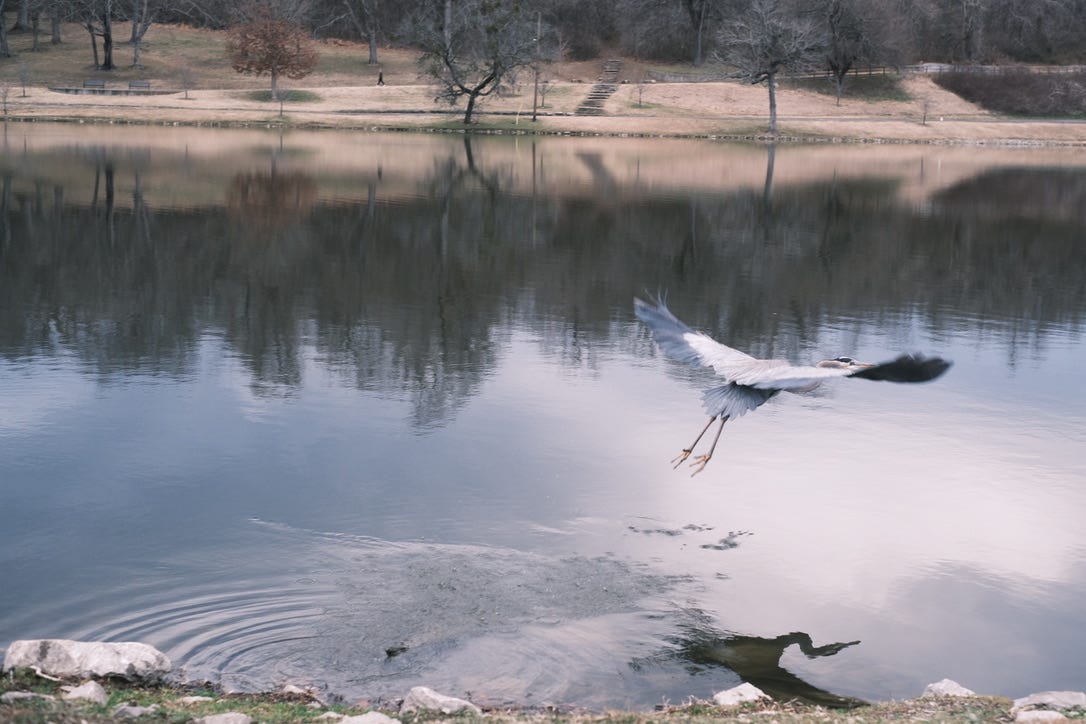
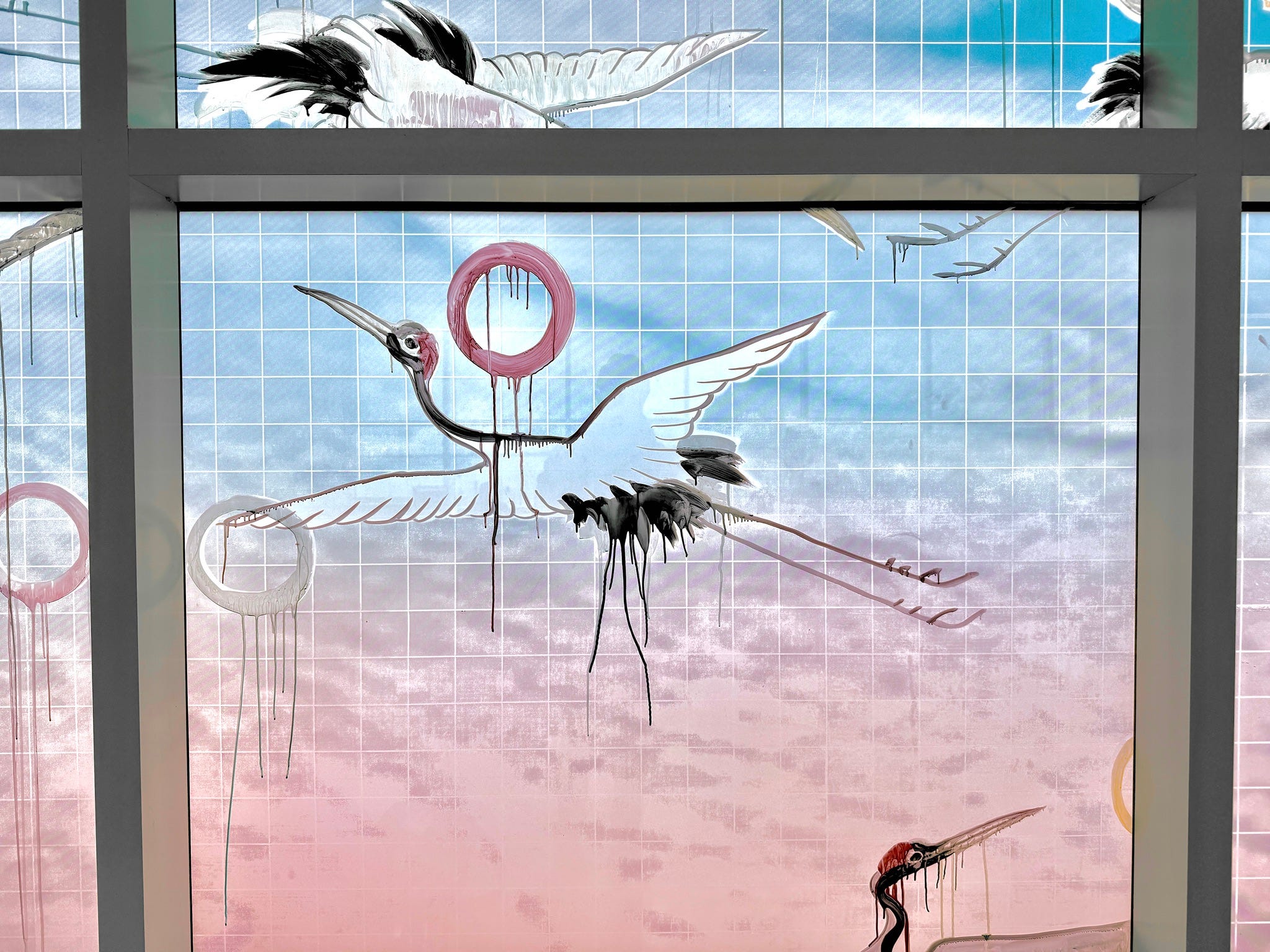
First, I imagine a crane in the meditation hall of my mind. The crane hovers above the alter, where the teacher sits.
The crane’s wings open and close slowly, beautifully, magestically.
I breathe in sync with the crane’s wings.
On the inhale, the wings slowly rise. On the exhale, the wings slowly fall.
Seeing the crane’s wings are your anchor, the crane’s wings are a visualization of your breath.
Enjoy this feeling. Enjoy the sight of this glorious crane of your imagination.
No incense. No performance. No judgment. Just breath turning into wings.
(The wings flap too fast in this clip, but this video is a reenactment of my inner vision, thanks to the help of artificial intelligence.)
Part 2. Naming the drifts.
Don’t get me wrong, the mind will drift. Don’t worry. My thinking - stay thinking.
My brain stay writing books, sketching paintings, writing speeches. It rewrites arguments. It builds whole companies and brands out of thin air. It is brilliant and restless and a little undisciplined. My brain does not clock out just because I lit a candle.
And that’s the entire point of this practice.
But instead of fighting it, I name it.
I transform it.
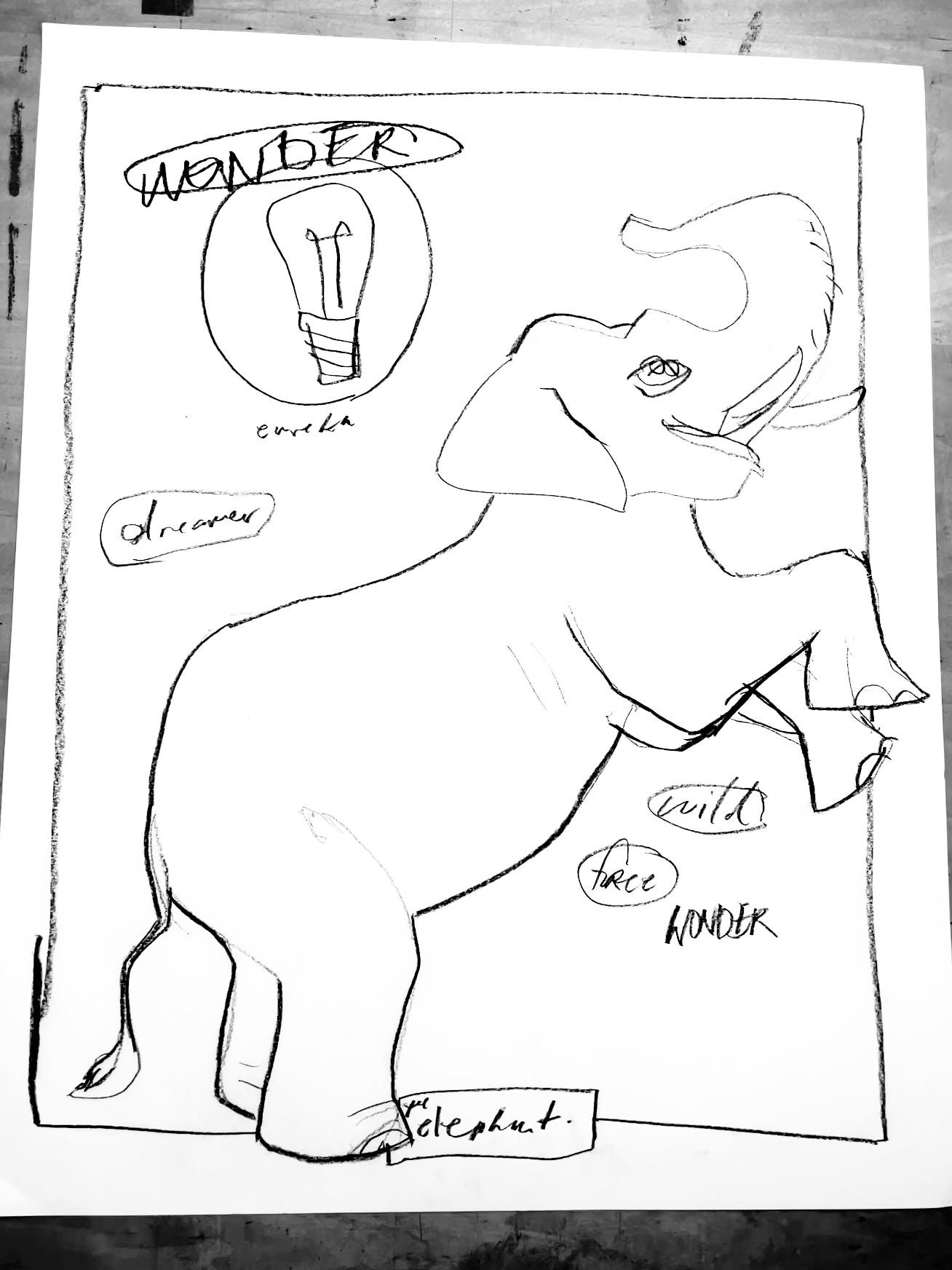
Meet the elephant in the room
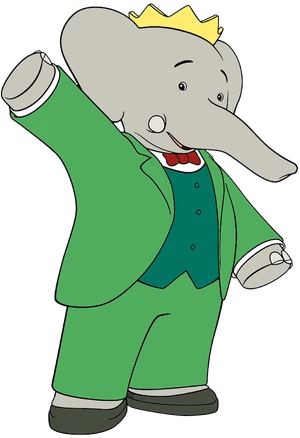
When I have ideas. I think of them as elephants that enter the meditation hall. Mostly because I love the idea of elephants. They make me happy. Maybe it was years of watching Babar as a kid.
When I start thinking about a new book I want to write or a friend I want to talk to or anything pleasant or neutral that’s got my mind. I don’t push it away or get mad at myself. I hold no judgement. I’ve done nothing wrong. I didn’t ruin the meditation.
As soon as I realize I’ve drifted from the crane - I say, “Oooo, an elephant is here.” It’s a pleasant reaction. I see the elephant. And I escape the content of the idea.
It’s just a big floppy ear, cute elephant now. And I smile to the elephant. And let it roam there, and eventually, I come back to the crane. On long mediations I spend more time with the elephant before forcing myself back to the crane.
NOTE: If you’re new to this practice, stop there. That’s enough. But if you want to go deeper…
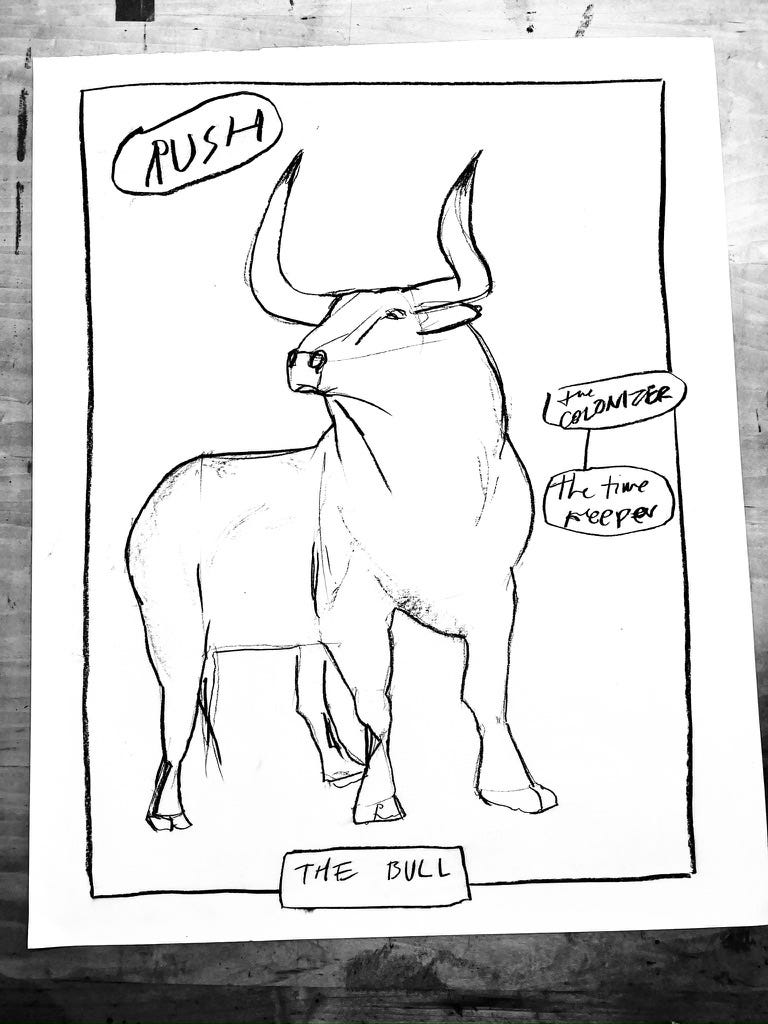
Meet the Bull.
Whenever thoughts show up that aren’t so pleasant — the itching, the rushing, the hunger, the pain.
“I don’t have time for this.” “I got other things to do.” “Why did I say that yesterday?” “My butt hurts.”
Any energy that feels wild, demanding, impatient, trying to yank me out of stillness — that’s a bull.
Sometimes I call him “The Colonizer.” Because those thoughts come with whips. With urgency. With demand. With the lie that I am behind and need to prove something right now.
A bull kicks the door open snorting,
you wasting time,
you’re not good enough,
just give up on this.
Now it’s not some invisible pressure squeezing my chest.
It’s a creature in the field.
I can see it - rushing in. I can nod at it. I don’t have to saddle it up and ride.
I am not the bull. I am experiencing the bull.
I just watch it. And return to the crane.
There can be others too.
The ones above are the most important to this practice, they mirror the concept of vedena - noticing pleasant and unpleasant and neither. But there are other animals I use in this visualization.
The Buffalo appears with duties, steady, strong and hardworking when tasks, work thoughts, obligations, to-do’s arise. These are neutral feelings mostly. sometimes a little unpleasant due to the urgency of them, but I just let them stroll in and out.
The Bear appears with big feelings, I was once dealing with anger toward someone and the thought of them kept coming in my meditation. It was hard to practice. We were in conflict. I kept fighting the thought - thinking it was a distraction to the practice. Until I let it into the practice - it was the largest bear I ever saw. I cared for the bear. I hugged the bear, like a child. It wasn’t there to hurt me, it was there to protect me. But until it knows it’s protection is not needed it was blinding me. I learned to treat big feelings like this with kindness and they seem to shrink.
Writing this now makes me think, we will need to return to this one in a later session.
Make up your own.
There can be tigers for confusion/debate. Snakes for unwise temptations. Flowers for growth. Butterflies for itching. You can create whatever symbols support your practice.
Just don’t get lost building a zoo!
The point isn’t to categorize every thought or experience in the body. The point is to form a relationship with them without getting caught in their content. I’d only make up another one if its an experience that you feel is unique to you and just wont leave you alone. This just let’s you know that thing is NOT YOU. It is something you are experiencing.
And then return to the crane.
Return to the breath.
Return to the present moment.
Why do this practice?
Because here’s what I’ve learned:
The hook that has no face or name becomes your master.
We are not controlled by the thoughts we can see.
We are controlled by unnamed thoughts. By the blur. By the feeling we can’t quite articulate but still obey.
This is the father of addiction. And unwise behaviors and patterns. Of self-betrayal.
And we name what arises. We awaken the heart.
The crane/breath keeps moving.
Up. Down. In. Out.
While the elephant wanders. While the bull runs. While the buffalo strides by.
We are not suppressing anything. Most days I’m smiling at the thoughts. Bowing to the thoughts. Grateful the mind is alive.
But I’m just not getting caught up in their agenda.
I’m just not letting the fog run the house.
I am the master - this practice is an exercise of our sovereignty.
Remember
The hook that has no face or name becomes your master.
Meditation Club is an unpolished audio journal of my practice—shared meditations, poems, dharma I’m learning, and books I’m reading as a lay practitioner on the path of the bodhisattva. Nothing Formal. Just presence. I'm Shabazz Larkin an artist, author and father in Nashville, TN, with a love for awakening the heart.
Meditation Club is an unpolished audio journal of my practice—shared meditations, poems, dharma I’m learning, and books I’m reading as a lay practitioner on the path of the bodhisattva. Nothing Formal. Just presence. I'm Shabazz Larkin an artist, author and father in Nashville, TN, with a love for awakening the heart.